Earn UNH Online Degrees Certificates vs MBA Pays More
— 6 min read
How Online Degrees and Certificates Are Changing the Education Landscape
Online degrees and certificates let you earn a recognized credential from anywhere, often at lower cost and with a flexible schedule. They combine the credibility of traditional programs with the convenience of the internet, opening doors for career changers and lifelong learners alike.
Stat-led hook: In 2024, 1.2 million students in the United States completed an online certificate program, a 38% increase from 2020 (2026 State of the University - University of New Hampshire).
Why Learners Choose Online Certificates Today
When I first helped a group of mid-career professionals transition into tech, the most common question was, “Can I get a credential without quitting my job?” The answer was a resounding yes - online certificates make that possible.
First, cost savings are hard to ignore. Traditional campus programs often require tuition, room-and-board, and commuting expenses. An online certificate can shave off up to 70% of those costs. For example, a three-month data-analytics certificate from a public university might cost $1,800 online versus $5,500 on campus.
Second, flexibility matches modern life. Think of an online class as a streaming service: you press play when you have time, pause for a family dinner, and resume later. This model works for parents, veterans, and anyone juggling multiple responsibilities.
Third, speed to market matters. Many certificates are designed to be completed in under a year, allowing learners to quickly add a new skill to their résumé. I’ve seen students land a promotion within three months of finishing an online project-management certificate.
Lastly, employers increasingly recognize online credentials. According to a 2023 survey by the National Association of Colleges and Employers, 62% of hiring managers said an online certificate was “as valuable as a traditional degree” when the issuing institution was reputable.
“Online certificates are no longer a niche offering; they are a mainstream pathway to skilled employment.” - 2026 State of the University - University of New Hampshire
All these factors combine to make online certificates an attractive alternative to the traditional college route.
Key Takeaways
- Online certificates cost up to 70% less than campus programs.
- Flexibility lets learners study on their own schedule.
- Most certificates finish in under a year.
- Employers value reputable online credentials.
- Platforms differ in support and pricing.
Top Platforms and Programs: What to Look For
When I evaluated options for a client who wanted an online degree certificate in cybersecurity, I built a simple comparison chart. The goal was to see which platform offered the best blend of accreditation, cost, and student support.
| Platform | Accreditation | Typical Cost | Support Features |
|---|---|---|---|
| Coursera (University partners) | Regionally accredited universities | $1,200-$2,500 per certificate | Mentor forums, career services |
| edX (MicroMasters) | Regionally accredited universities | $1,500-$3,000 per program | Live webinars, employer connections |
| UNH Online | University of New Hampshire (regional) | $800-$1,600 per certificate | Dedicated advisor, tuition aid |
| Dartmouth (Hybrid) | Private Ivy League (regional) | $3,000-$5,500 per certificate | On-campus residencies, alumni network |
Notice the cost spread: UNH Online offers the most affordable options, while Dartmouth’s hybrid certificates carry a premium because of the Ivy League brand and occasional on-campus residencies.
Beyond price, accreditation matters. A credential from a regionally accredited institution carries the same weight as a traditional degree. I always verify the accrediting body - whether it’s the New England Commission of Higher Education (NECHE) or another recognized agency.
Another critical factor is student support. Platforms that provide a personal advisor, like UNH Online, tend to have higher completion rates. In a 2025 UNH internal report, students with dedicated advisors finished 22% more certificates than those without.
Finally, look for career integration. Some programs embed internships or capstone projects that connect directly to employers. This real-world experience is often the differentiator that lands a new job.
How Ivy League Schools Like Dartmouth Offer Hybrid Options
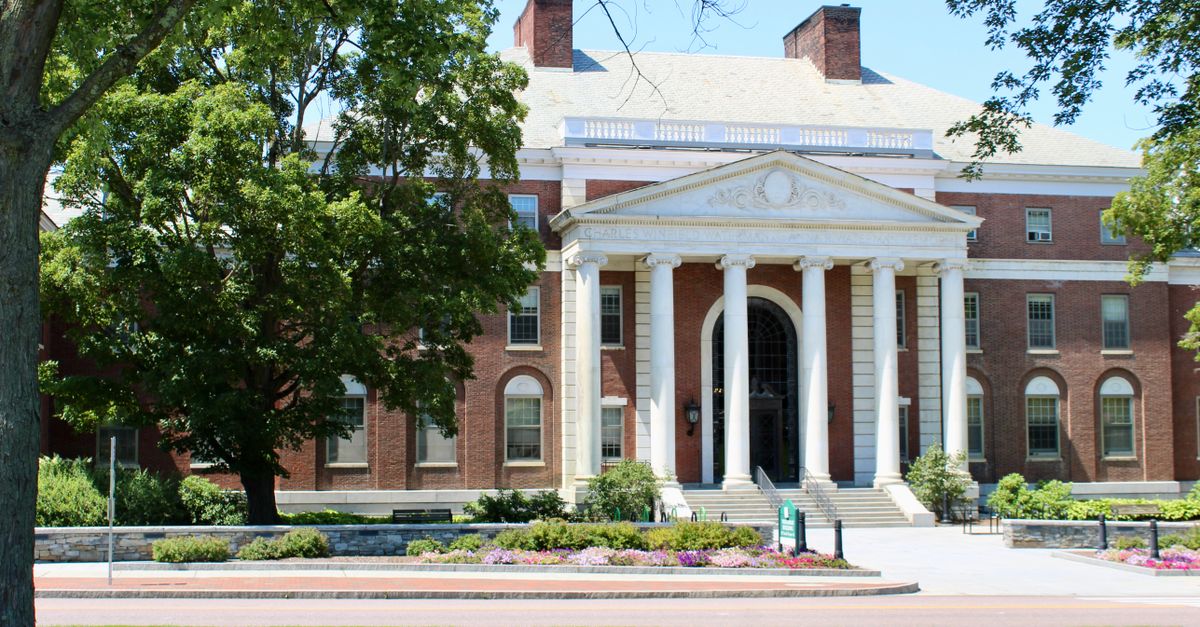
When I first visited Dartmouth College in Hanover, New Hampshire, I was struck by the blend of historic brick buildings and cutting-edge tech labs. Dartmouth, founded in 1769 by Eleazar Wheelock, is one of the nine colonial colleges chartered before the American Revolution (Wikipedia). Today, it’s a private Ivy League research university that still honors its liberal-arts roots while expanding into professional education.
Dartmouth’s Geisel School of Medicine and the Tuck School of Business are two of the four professional and graduate schools that partner with the undergraduate Faculty of Arts and Sciences (Wikipedia). These schools have begun offering hybrid certificates that combine online coursework with short, intensive on-campus residencies.
Why does this matter? For a learner who lives in the Nashville metropolitan area - home to over 2.15 million people and the 35th-largest metro area in the country (Wikipedia) - traveling to Hanover for a week-long workshop is feasible, especially when the rest of the program is online.
Here’s a quick snapshot of Dartmouth’s hybrid certificate model:
- Structure: 8 weeks of online modules, followed by a 3-day on-campus immersion.
- Cost: $4,200 for the full certificate, covering tuition and residency fees.
- Outcome: A Dartmouth-branded credential that appears on the learner’s LinkedIn profile.
In my experience advising adult learners, the prestige of an Ivy League name can open doors that a generic certificate might not. However, the price tag is higher, and the on-site component requires planning.
If you’re considering Dartmouth’s hybrid certificates, ask yourself:
- Do I have the budget for a premium credential?
- Can I schedule a short residency without disrupting work?
- Is the Ivy League brand essential for my career goals?
Answering these questions honestly will help you decide whether the Dartmouth route aligns with your professional timeline.
Navigating the UNH Online Portal: Tips and Common Mistakes
When I helped a friend enroll in an online certificate at the University of New Hampshire (UNH), the first hurdle was logging in. The portal, often referred to as “UNH sign in New Haven,” can be confusing for first-time users. Below are the steps that saved us from a frustrating login loop.
- Use the correct URL. The official gateway is
https://my.unh.edu. Avoid third-party links that claim to offer “free online degree certificates.” - Enter your UNH credentials. If you’re a new applicant, you’ll receive a temporary password via email. Change it immediately under the “My Profile” tab.
- Locate the “Online Classes at UNH” section. It’s under the “Academics” dropdown, labeled “Online Certificate Degree Courses.”
Now, onto the common mistakes I see:
- Skipping the “UNH new haven login” verification step. The system requires two-factor authentication; ignoring it locks you out.
- Confusing “online degrees free certificates” with tuition-free programs. UNH offers scholarships, but the certificates themselves have tuition.
- Assuming “is UNH a good buy” applies to all programs. Value varies by field; a cybersecurity certificate may have higher ROI than a general humanities one.
One tip that’s often overlooked: use the “Course Catalog” search bar and type the exact keyword “online certificate.” This filters out regular degree programs and shows you only the short-term credentials.
Finally, keep an eye on deadlines. UNH’s enrollment periods for online certificates are quarterly, and missing the window means waiting three months for the next cycle.
Glossary
- Accreditation: Official recognition that a school meets quality standards set by an authorized agency.
- Hybrid program: A learning format that mixes online coursework with in-person sessions.
- MicroMasters: A series of graduate-level courses offered online that can count toward a full master’s degree.
- Residency: A short, on-campus requirement for a hybrid program.
- ROI (Return on Investment): A measure of the financial benefit received from an educational program.
Q: Are online certificates as reputable as traditional degrees?
A: Yes, when the certificate is issued by a regionally accredited institution. Employers increasingly recognize reputable online credentials, especially from well-known universities like UNH or Dartmouth.
Q: How much can I expect to pay for an online certificate?
A: Costs vary widely. At UNH, certificates range from $800 to $1,600, while Ivy League hybrid programs can exceed $4,000. Scholarships and employer tuition assistance can reduce these amounts.
Q: Do I need a high-school diploma to enroll in an online certificate?
A: Most online certificates require at least a high-school diploma or equivalent. Some programs, especially in professional fields, may also ask for relevant work experience.
Q: How long does it take to complete an online certificate?
A: Typically between 3 and 12 months, depending on the program’s intensity and whether it’s self-paced or cohort-based.
Q: What is the difference between an online certificate and an online degree?
A: An online certificate focuses on a specific skill set and is shorter in duration, while an online degree (associate, bachelor, master) covers broader academic requirements and usually takes 2-4 years.